
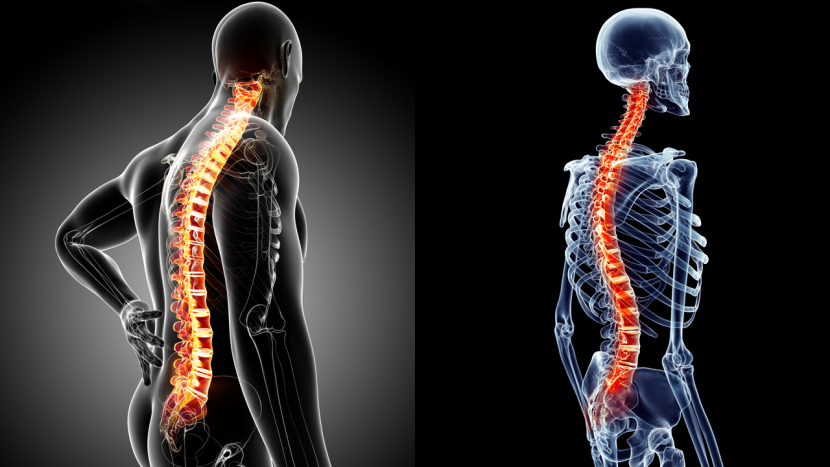
Your spine is not meant to be completely straight. Viewed from the side, it has a series of curves that help keep your body balanced while you stand, walk and move.
These curves also influence how physical loads are distributed through the vertebrae, discs, joints and surrounding muscles. Their shape can therefore be an important part of a thorough spinal assessment.
Understanding the Sagittal Curves
The side view of the spine is known as the sagittal plane.
In this view, the neck and lower back normally curve gently forwards. These curves are called lordoses. The middle and upper back curve in the opposite direction, forming the thoracic kyphosis.
Together, these curves create the spine’s characteristic S-shape:
• Cervical lordosis in the neck
• Thoracic kyphosis through the upper and middle back
• Lumbar lordosis in the lower back
• Sacral kyphosis at the base of the spine
These curves are not simply cosmetic. They work together to position the head, rib cage and pelvis over the body’s base of support.
Is There an Ideal Spinal Shape?
Research led by spinal biomechanist Dr Deed Harrison has used mathematical modelling and spinal X-rays to examine the shape of normal cervical and lumbar curves.
This research found that healthy spinal curves tend to follow predictable geometric patterns. The cervical spine can be modelled using a circular or elliptical shape, while the lumbar curve can also be described using an elliptical model.
These models provide clinicians with useful reference points when assessing spinal alignment. They do not mean that every healthy person must have precisely the same measurements. Age, anatomy, previous injuries and other individual factors all contribute to natural variation.
The important question is whether the spinal curves are working together effectively and whether altered alignment is associated with symptoms, restricted movement or increased physical demand on the body.
Why Thoracic Kyphosis Matters
Some degree of thoracic kyphosis is normal and necessary. However, a pronounced increase in this curve is known as hyperkyphosis.
Hyperkyphosis may develop in association with:
• Vertebral compression fractures
• Osteoporosis
• Age-related changes
• Reduced spinal mobility
• Muscle weakness
• Degenerative changes
• Certain developmental conditions
It may produce a noticeably rounded upper back and bring the head and shoulders further forwards.
Research involving older adults has found that pronounced hyperkyphosis is associated with reduced physical function, breathing limitations and an increased risk of falls.
Prospective studies have also reported an association between hyperkyphotic posture and a higher mortality rate in older adults. One major study involving older women found that the association remained after accounting for vertebral osteoporosis.
This does not mean that an ordinary rounded posture directly causes serious illness. Hyperkyphosis can reflect several interacting factors, including spinal fractures, frailty, reduced strength and declining general health. Nevertheless, the findings show that a marked increase in thoracic kyphosis can be clinically meaningful and should not always be dismissed as an inevitable cosmetic effect of ageing.
Changes in the Cervical Curve
The neck normally has a forward curve that helps position the head over the shoulders.
This curve may become reduced, straightened or, in some cases, reversed. Possible contributing factors include trauma, sustained postural loading, muscular guarding and degenerative change.
A change seen on an X-ray does not automatically explain every headache, episode of neck pain or neurological symptom. However, cervical alignment can affect how forces are distributed through the neck and how hard the supporting muscles must work.
For this reason, the curve should be considered alongside symptoms, movement, neurological findings and the person’s history.
Changes in the Lumbar Curve
The lumbar lordosis helps balance the upper body over the pelvis.
Too little or too much lumbar curvature may alter the load placed on the spinal joints, discs and surrounding muscles. Pelvic position also has an important influence on the appearance and function of the lower-back curve.
As with the neck, there is no single measurement that is correct for every person. Lumbar alignment needs to be considered in relation to the pelvis, hips, thoracic spine and overall sagittal balance.
The Spine Is More Than Separate Curves
The cervical, thoracic and lumbar regions do not work independently. A change in one area may be accompanied by compensation elsewhere.
For example, increased thoracic kyphosis may bring the upper body forwards. The neck may then extend to keep the eyes level, while the lower back or pelvis changes position to help maintain balance.
This is why examining only one isolated spinal segment can provide an incomplete picture.
How Spinal Curves Are Assessed
Assessment may include:
• Postural observation
• Spinal and joint movement
• Muscle strength and flexibility
• Balance and walking ability
• Neurological testing when appropriate
• Standing spinal X-rays when clinically indicated
X-rays allow sagittal alignment to be measured, but the images should always be interpreted alongside the examination and the person’s symptoms and health history.
Supporting Healthy Spinal Function
Supporting the spine does not mean trying to hold a rigid, “perfect” posture throughout the day. Bodies are designed to move, and regularly changing position is usually more practical than attempting to remain perfectly straight.
Helpful strategies may include:
• Regular walking and general physical activity
• Strengthening the back, hip and trunk muscles
• Maintaining bone health
• Breaking up prolonged sitting
• Adjusting screens and workstations
• Moving regularly through comfortable ranges
• Seeking assessment after significant injury or persistent change
Chiropractic care may assist with joint mobility, movement and the physical demands associated with altered posture. Advice may also include suitable exercises, workplace changes and strategies for maintaining movement between appointments.
When to Seek an Assessment
Consider arranging an assessment if you notice:
• A progressively rounded upper back
• A significant change in posture
• Persistent neck or back discomfort
• Difficulty standing upright
• Loss of height
• Reduced balance or mobility
• Symptoms following a fall or injury
• Numbness, weakness or changes in coordination
Rapid postural change, unexplained loss of height or symptoms following a fall may warrant further investigation for vertebral fracture or osteoporosis.
A Balanced View of Spinal Curves
Spinal curves are normal, necessary and individually variable. Research provides useful models of healthy sagittal alignment, but a person should not be judged by a single angle or X-ray measurement.
The most useful assessment considers spinal structure together with movement, symptoms, physical function and general health.
At NorWest Chiropractic, we assess how the different regions of the spine are working together and discuss care options based on each person’s individual findings.
References
- Harrison DD, Troyanovich SJ, Harrison DE, Janik TJ and Murphy DJ. A normal sagittal spinal configuration: a desirable clinical outcome. Journal of Manipulative and Physiological Therapeutics. 1996.
- Harrison DE and colleagues. Modeling of the sagittal cervical spine as a method to discriminate hypolordosis. Journal of Spinal Disorders & Techniques. 2004.
- Kado DM and colleagues. Hyperkyphosis predicts mortality independent of vertebral osteoporosis in older women. Annals of Internal Medicine. 2009.